Blog Post 3
How will your interactive learning resource specifically ensure that the needs of all learners can be met?
We designed our interactive learning resource with all learners in mind, following UDL and curriculum standards.
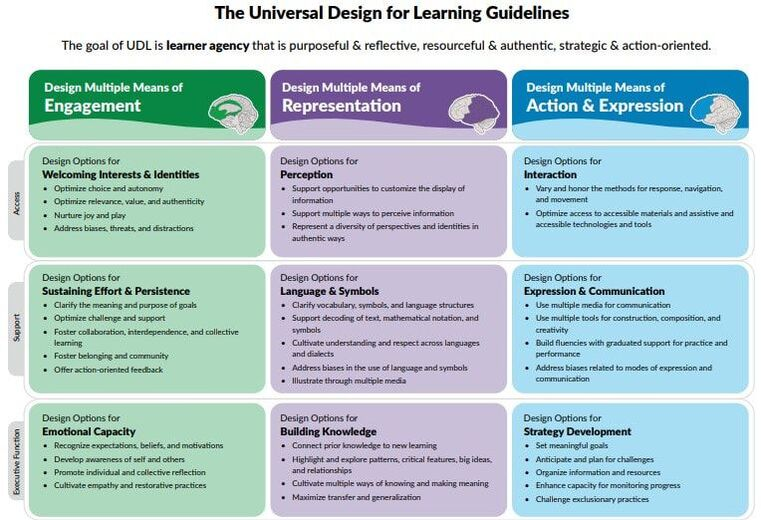
Focusing on the UDL means for Representation, we have broken up our unit into numerous mini topics, applying the principle of building knowledge. By chunking the information, it allows students to learn information at a slower rate, not overloading learners with information. With chunking information, it also allows students to connect what they have learned to prior knowledge. With learning prerequisite knowledge, the student can take these past lessons and experiences and build onto it with their new knowledge. For the UDL principle of language and symbols, we have students learning through numerous sources of media, working with posters, worksheets, quizzes, and looking online for sources.
UDL also focuses on providing multiple means of engagement. With the principle of designing for emotional capacity, our learning resource provides lots of time for reflection. Our unit provides many times for students to participate in Think, Pair, Shares, where they have the opportunity to reflect on a piece given to them, and share their reflection with classmates after. They will reflect on these historical and societal gender stereotypes and how they apply to the workplace and everyday life. This allows for learners to gain empathy, learning through new perspectives, as well as gain awareness of these stereotypes, and awareness of how they are acting into these stereotypes, and what can be changed. Our learning design also allows for sustained effort and persistence, as our lessons are designed to be taught in a safe classroom space, as gender roles can be a hard subject for some.
Finally, UDL focuses on multiple means of design and expression. Following the interaction principle, students will have numerous ways to present their information that they have learned and show their understanding, allowing for more inclusive and accessible learning. Using the design for expression and communication, students will share their reflections to both their peers and their teacher, having the option to use different means to learn including technology choices.
For learners with IEPS, the resource can be easily adjusted to fit those needs, making it an inclusive learning resource. By implementing UDL, it is a key step to inclusivity, making sure all learners can fully participate.
Resources
CAST, Inc. (n.d.). The UDL guidelines. CAST Universal Design for Learning Guidelines. https://udlguidelines.cast.org/